

泥螺属软体动物门腹足纲后鳃亚纲头楯目阿地螺科。外壳呈卵圆形,壳薄脆,其壳不能包住全部身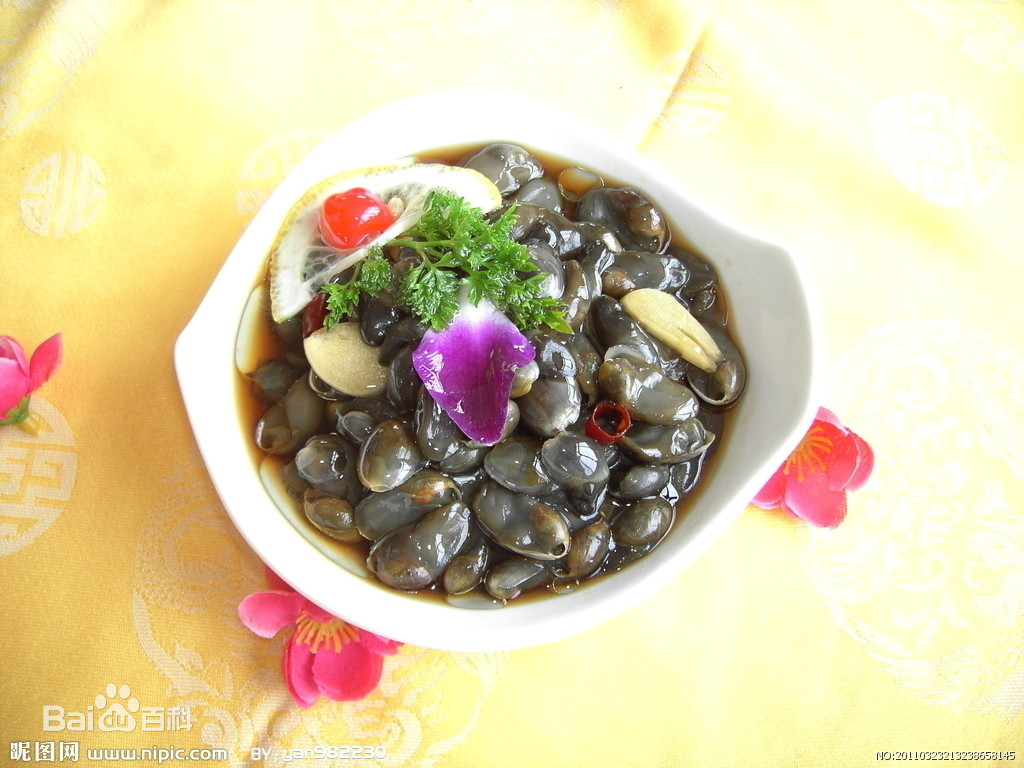 体,腹足两侧的边缘露在壳的外面,并且反折过来遮盖了壳的一部份。泥螺壳薄而脆,成贝体长40mm左右,宽约12~15mm。体长方形,拖鞋状头盘大,无触角。壳无螺塔。
泥螺在中国沿海都有出产,是典型的潮间带底栖匍匐动物,多栖息在中底潮带,泥沙或沙泥的滩涂上,在风浪小、潮流缓慢的海湾中尤其密集,以东海和黄海产量最多。泥螺以桃花盛开时所产的质量最佳,此时泥螺刚刚长发,体内无泥,且无菌,味道也特别鲜美。中秋时节所产的“桂花泥螺”,虽然比不上农历三月时的“桃花泥螺”,但也粒大脂丰,极其鲜美。泥螺含有丰富的蛋白质、钙、磷、铁及多种维生素成份。
学名: Bullacta exarata (Philippi,1848)
The mud snail is a typical benthic reptile in intertidal zone, which is produced along the coast of China. It mainly inhabits the mid bottom tidal zone, mud or sand mudflat, and is especially dense in the bays with low wind waves and slow tide. The East China Sea and the Yellow Sea produce the most. The quality of the whelk is the best when the peach blossom is in full bloom. At this time, the whelk just has long hair, and there is no mud in the body. It is sterile and tastes particularly delicious. The "sweet scented whelk" produced in the Mid Autumn Festival is not as big as the "peach blossom whelk" produced in the March of the lunar calendar, but it is also big, fat and delicious. The whelk is rich in protein, calcium, phosphorus, iron and various vitamins.