

学名:Grus japonensis
英文名:Red-crownedCrane
分类:鹤形目
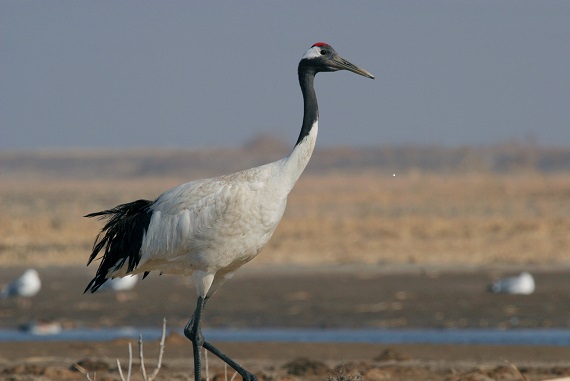
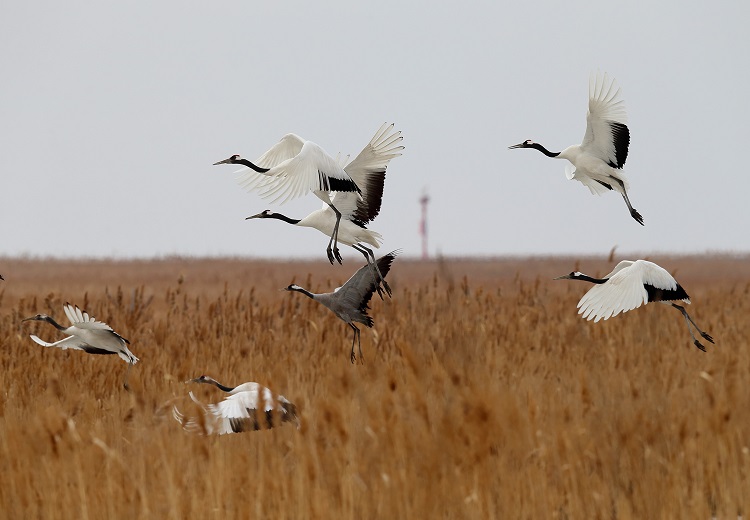
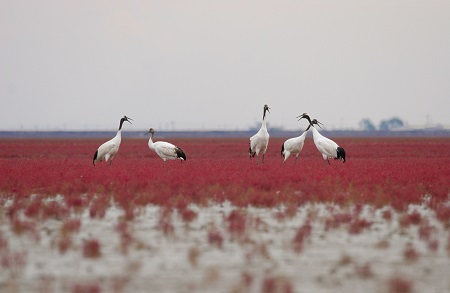
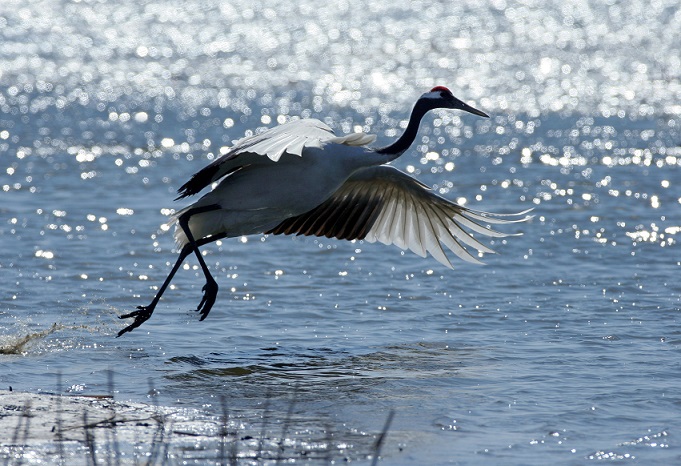
丹顶鹤,大型涉禽,体长120~160cm。常成对、成家族群或小群活动,迁徙季节和冬季时组成数个或数十个家族大群,有时集群多达40~50只,甚至100多只。夜间多栖息于四周环水的浅滩、苇塘边。主要以鱼、虾、水生昆虫、软体动物、蝌蚪、沙蚕、蛤蜊、钉螺及水生植物的茎、叶、块根、球茎和果实为食。国家一级重点保护动物。被列入世界濒危鸟类红皮书。分布于中国东北、蒙古东部、俄罗斯乌苏里江东岸、朝鲜、韩国和日本北海道等地。
Red-crowned crane is a kind of large waterfowl which belongs to the order of Gruiformes,and the body length is 120 ~ 160cm. They often go out in pair, family or small group, when in the migration season and the winter,they always compose a large group, and sometimes the member of the group is up to 40 to 50 clusters, even more than 100.They always inhabit in the shallow beach around water and reed pond and mainly live on fish, shrimp, aquatic insects, mollusks, tadpoles, nymphs, clams, snails and aquatic plants stems, leaves, roots, bulbs and fruit.This species belongs to the national first class protected animals,which is included in the World Endangered Birds Red Book.Distributed in northeast of China, east of Mongolia, the east coast of the Russian Wusuli River, North Korea, South Korea,Japan Hokkaido and other places.
全球共有15种鹤,我国有9种,在辽河口湿地有6种:丹顶鹤、白鹤、白头鹤、白枕鹤、灰鹤、蓑羽鹤。其中,有4种是世界濒危鹤种,2种为国家一类保护动物,1种为国家二类保护动物。
每年3月,残雪还未消融,第一种回归的候鸟便是丹顶鹤。辽河口湿地是世界上最主要的丹顶鹤迁徙中转地、最北端的越冬地、最南端的繁殖地。近年来,每年约有50只丹顶鹤到此便不再中转了。
安顿下来之后,丹顶鹤就开始新生命的孕育了。一个繁殖期,每对丹顶鹤大约产卵2枚,由雌雄鸟轮流孵化,孵化期为30天左右。可是,丹顶鹤幼雏成活率极低,因稀少更加弥足珍贵。
丹顶鹤是杂食性动物,除了以滩涂上的小鱼、小虾为食之外,还吃一些草籽或玉米。丹顶鹤饱食后喜欢跳舞,常常情不自禁地拍打翅膀,引颈高歌。丹顶鹤身着黑白相间的衣裙,红冠,高足,体态优雅,可谓湿地“女神”。丹顶鹤鸣声清幽,穿透力极强,给人以神圣之感,闻之心生敬畏。丹顶鹤是训练有术的“短跑”运动员,飞行前很讲究助跑。不过,它们更是优秀的“长跑”健将,一天飞行七八小时、几百千米,根本不成问题。
丹顶鹤警惕性极高,常常营巢在避风、芦荡深处的高冈上,且细心地用陈年的干苇子铺好,巢的直径长达100cm左右。觅食前后,它们要仔细观察周边环境,再做出“出发”或“回巢”的决定。孵化结束后,丹顶鹤的巢就弃之不用了。所以,不管是它们的新居还是旧巢,很难见到。
在我国历史上,丹顶鹤属一等文禽,被赋予忠贞清正、品德高尚的文化内涵。明、清时代,一品文官的官服上绣有丹顶鹤的图案,是仅次于皇家专用的龙凤的重要标识。因此,人们也称它们为“一品鸟”。丹顶鹤的寿命长达五六十年,人们常把它们作为长寿的象征。
There are 15 species of cranes in the world, 9 species in China, 6 species in Liaohekou wetland: red-crowned crane, white crane, white-headed crane, white-naped crane, gray crane.Among them, there are four kinds of endangered species in the world, two species for the first class of protected animals, one species for the second class of protected animals.
Every year in March, residual snow has not yet melted, the first return of migratory birds is red-crowned crane. Liaohekou wetland is the world's most important red-crowned crane migration transit, the northernmost winter-passing site, the southernmost breeding ground. In recent years, about 50 red-crowned cranes are no longer in transit when they get to the wetland in Panjin.
After settling down, the red-crowned crane began to nurture new life. Each pair of red-crowned cranes produce two eggs, by the male and female hatching in rotation, and incubation period is about 30 days or so. However, the red-crowned crane young child survival rate is very low, so they are rare and more precious.
Red-crowned cranes are omnivorous animals, mainly live on the small fish, shrimp, but also some grass seeds or corn. Red-crowned cranes like to eat after dancing. Red-crowned crane dressed in black and white dress, red crown, high feet, elegant body, can be described as wetland "goddess". Red-crowned cranes voice is clear, with strong penetrating, giving a sense of holy and making the heart of awe. Red-crowned cranes are trained as"sprint" athletes, they always use running to help the flight. However, they are excellent "long-distance running" athletes, seven or eight hours a day flight about hundreds of kilometers, is not a problem.
Red-crowned crane vigilance is very high, often nest in the shelter, and carefully paved with the old dry ree, the diameter of the nest is up to 100cm or so. Before and after foraging, they have to carefully observe the surrounding environment, and then make "starting" or "back to the nest" decision. After the hatching, the red-crowned crane's nest is abandoned. So whether it is their new home or old nest, it is difficult to see.
In Chinese history, the red-crowned crane is the first-class fowl, is given loyalty and integrity, high moral connotation. Ming and Qing dynasties, first-class civil servants on the official dress embroidered with red-crowned crane pattern, which is second only to the royal special dragon and phoenix important logo. Therefore, people also call them "first class birds". Red-crowned cranes life is up to fifty or sixty years, people often use them as a symbol of longevity.